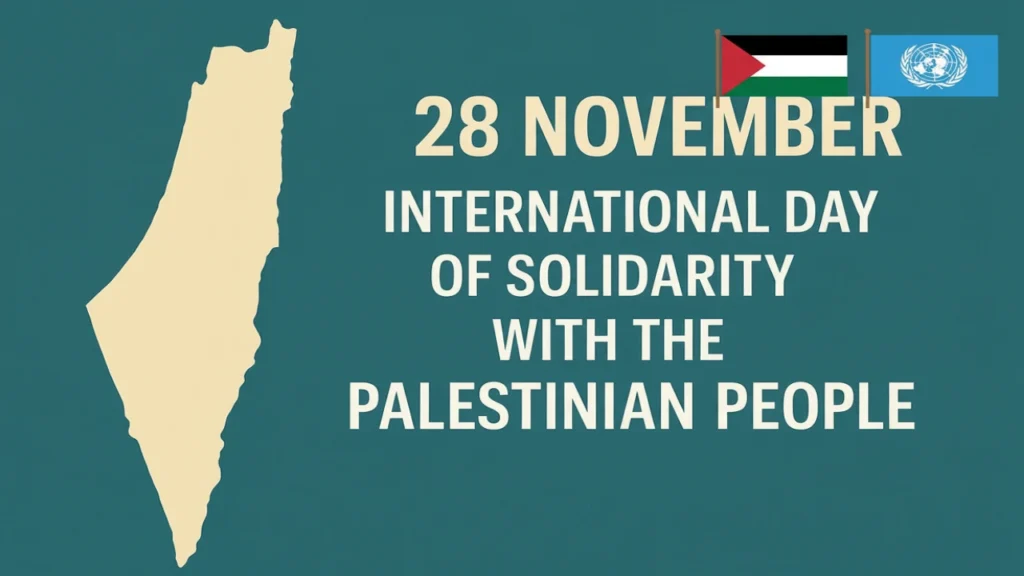
Every year on 28 November, countries around the world observe the International Day of Solidarity with the Palestinian People. It is a moment set aside to acknowledge the long-standing challenges facing Palestinians and to reaffirm support for a peaceful, just resolution to the conflict.
This day consistently draws global attention, making it a topic people search for around late November and one that often resurfaces in news and social discussions.
What the Day Represents
The observance focuses on the ongoing situation of the Palestinian people, including their rights to self-determination, independence, and dignity. It also highlights the humanitarian issues that remain unresolved and keeps the conversation active within the international community.
Why 28 November?
The date is linked to the UN General Assembly’s 1947 Partition Plan (Resolution 181), which proposed the division of Palestine into separate states. In 1977, the UN designated this period as a time to reflect on the history of the conflict and the status of Palestinians today.
The aim is not to revisit old debates, but to ensure that the situation and its humanitarian implications are not overlooked.
Purpose of the International Day of Solidarity
The day serves several functions:
• Raising awareness
Governments, organizations, and individuals use this date to highlight current conditions and challenges affecting Palestinians.
• Encouraging dialogue
Discussions, panels, and public statements often focus on promoting peaceful solutions and the importance of diplomacy.
• Cultural recognition
Events frequently include cultural exhibitions to showcase Palestinian identity, heritage, and stories.
• Maintaining international focus
The observance keeps the topic present in global conversations, which is essential for long-term political and humanitarian efforts.
How It Is Observed Worldwide
Observances vary by region, but common activities include:
• UN-led events
These may involve speeches, reports, or exhibitions organized by the United Nations and its agencies.
• Public gatherings
In many cities, people hold peaceful rallies or public meetings to express support for a fair and lasting resolution.
• Cultural and educational programs
Films, photography exhibits, and cultural performances help broaden understanding of Palestinian history and daily life.
• Online awareness campaigns
Social media plays a significant role, with many sharing factual resources, historical context, and messages of solidarity.
Why This Topic Performs Well in Search
From an SEO standpoint, this observance tends to receive consistent interest each year because:
- It is tied to a fixed international date, which naturally increases search volume in November.
- News outlets and global organizations cover related events, boosting visibility.
- Readers look for background information, current relevance, and historical context, all of which are topics search engines prioritize.
- It blends evergreen content (history, meaning) with seasonal relevance (annual observance).
Conclusion
The International Day of Solidarity with the Palestinian People is intended to keep attention focused on an issue that remains central to international discussions. By reflecting on the history, humanitarian concerns, and ongoing search for peace, the day helps ensure that the Palestinian question stays visible and understood within a broader global context.